
Xampp Download For Mac Os
Steps to Install XAMPP in MAC. Download the appropriate DMG file and mount it to your mac by double click on it. Application installer opens and guides you through the installation steps. Double click on XAMPP icon to start the installation process. Click on Next button to continue. Select the XAMPP components which are all you want to install. Download XAMPP for Mac OSX - Be sure to select the proper version of PHP. For Webucator classes, any version after 5 will be fine. Open the downloaded file (the DMG-Image). Drag and drop the XAMPP folder into your Applications folder. Starting XAMPP on OSX. How to install Java 8 on Mac Hot Network Questions What is better: to have a modal open instantly and then load its contents, or to load its contents and then open it?
XAMPP is the most famous PHP and Perl development environment. It helps developers to setup a local server which is fully equipped with all necessary tools and helps them to work at high speed. It is a totally free, very simple in installing Apache distribution containing Maria DB (MySQL), PHP, and Perl. The set up of the the package is extremely easy for multiple operating systems like Windows, Linux, Mac OS X and Solaris.
XAMPP standsfor:
X: Cross-Platform
A: Apache
M: Maria DB (MySQL formerly)
P: PHP

P: Perl
- The above expansion elaborates that it is a cross-platform application developed by Apache Friends, which works perfectly on different operating systems like Windows, Linux and Mac.
- Maria DB (updated version of MySQL) is the database system used to store content and data of the website.
- PHP is scripting language used on server side for web development.
- Perl is also a scripting language used to develop web application (especially large projects are written in Perl).
Why XAMPP?
XAMPP has been set up to be the simplest and easiest method to install and run a development server. It is a complete open source package very easy to use, on the contrary to the other WAMP packages. There is a start button on XAMPP which initiates the web server and other processes. As mentioned above Apache, Maria DB (MySQL), PHP and Perl are its most popular tools. It also includes some very useful tools such as the phpMyAdmin database administration tool, Mercury mail server, FileZilla FTP server, programming language, and JSP server Tomcat.
Install Xampp On Mac
Easily you can configure the above services in the XAMPP control panel. Tasks such as checking the server status and security launch tools like phpMyAdmin and Webalizer analytics can be carried out from the control panel with ease. For the beginners there are demos for everything which can be of great use. Lets compare it with WAMP. Which one wins the battle regarding features. In the end you will be able to decide which package is suitable for you.
XAMPP Vs WAMP
| XAMPP | WAMPP |
|---|---|
| Cross-platform software, works with Windows, Mac and Linux. | Only works on Windows. |
| It includes Apache, Maria DB, PHP and Perl. | It comes with Apache, MySQL and PHP. |
| Clean and simple GUI, suitable for beginners. | Simple GUI but more buttons, which makes it best suited for experienced developers. |
| XAMPP is lightweight server. | WAMPP is little bit heavier server. |
| It consists of more extensions. | Limited or less extensions. |
This concludes that XAMPP is a complete package for anyone looking to get a full development server up and running within no time. Unlike WAMP it does not have advanced security, so it can’t be used as production server. If you want to make the server Web accessible, then you can do so, by not following the rules of Apache Friends development team.
Prerequisites & Features
Prerequisites for XAMPP are as follows:
- Only executable file needs to be downloaded and installed.
- Few or no web server components are required (components that are required for servers).
- Microsoft Visula C++ 2017 Redistributable is required for Windows Users.
Features of XAMPP are listed below:
- It is updated to the latest versions of Apache, Maria DB (MySQL), PHP and Perl.
- It comes with other modules including OpenSSL, phpMyAdmin, MediaWiki, Joomla, WordPress etc.
- It comes in full and standard version.
- Single computer can have multiple instances of XAMPP independently, and any of them can be copied to other computer.
How to Use?
The attribute which makes XAMPP popular is the simplicity atwhich WAMP webserver stack can be deployed and instantiated. Then Bitnamioffers some package applications are installed.
Initially, XAMPP was designed as a development tool, for designers and programers to test their work offline. Therefore there were no security features. Many important security features were disabled by its designers. The latest version of it has the ability to serve pages on Web. Like other administrative tools important and private parts of the package are password protected. It also has a great feature for creating and manipulating databases in Maria DB.
Connecting to MySQL Using PHP
MySQL database server is used to store Websites’ information or content. How you connect to MySQL using PHP in XAMPP is the real task?
For this purpose you need to follow these simple steps:
- Go to Admin button in the row next to MySQL.
- New database creation tab will open after clicking on admin.
Name new database like ‘newdb’. - By-default user is ‘root’ with no password. Next step is to write a connect script which will be used to connect MySQL.
<?php
$user = 'root';
$pass =' ';
$db = 'newdb';
$ndb = new mysqli ('localhost' , $user , $pass , $db) or die ('connection failed');
echo 'Successful' //if connection is successful then it will print successful
?> - This is how your are going to connect to MySQL using PHP, just run the above code. If the user does not know password or other variables then it will generate a warning. This way you may create different users and passwords to connect to XAMMP MySQL.
Download XAMPP
Both full and standard versions of XAMPP are available for the 64-bit as well as 32-bit architectures. Official website of XAMPP has just 64 bit installer download available. For the beginners trying to install 64 bit installer on 32 bit architecture system may face an error i.e. 216. Since there is no direct download link available for 32 bit architecture on Apache friends official website.
For users with operating system with 64 bit architecture there is a direct download link: just click here or visit their official website. For those using Operating system with 32 bit architecture getting above error, you can download XAMPP 32 bit architecture installer: just click here
XAMPP For Windows
Before installation keep in mind that download the installer from a trusted publisher or official website. As you have downloaded the installer from above link, now it’s time to install it properly. You may download XAMPP updated version from the link below. If you want other versions to download visit For Windows page.
How to Install XAMPP on Windows
- First of all open Web browser.
- You can use Google chrome or Safari.
- Download XAMPP installation file from the above link or any trusted publisher.
- Save this file in any location of your computer.
- After when the download is complete, before starting the installation process disable your firewall and disable Antivirus (if already installed in your system) to complete the installation.
- Now double click on the .exe file to run installation process.
- Follow the instructions that appear on your screen until the process is finished.
- Go to your desktop and click on the XAMPP icon to run the application.
- This is it, enjoy the fabulous app!
XAMPP for Mac
XAMPP is free for any OS similarly it is completely free for Mac. Also it is very easy to install and run Apache distribution containing MySQL, PHP, and Perl. For Mac OS The package has been set up to be very easy to install and to use like Windows OS. To install and run it on Mac OS download offline installer setup.
It is an easy to install Apache distribution for Mac OS X. The package for Mac is similar to windows. It includes the Apache web server, MySQL, PHP, Perl, an FTP server and phpMyAdmin.
XAMPP is no doubt a complete package with an easy and simple method to install and run on Mac OS X, unlike other WAMP packages. Apart from tools like Apache, Maria DB (MySQL), PHP and Perl it also includes some very useful tools such as the phpMyAdmin database administration tool, Mercury mail server, FileZilla FTP server, programming language, and JSP server Tomcat.
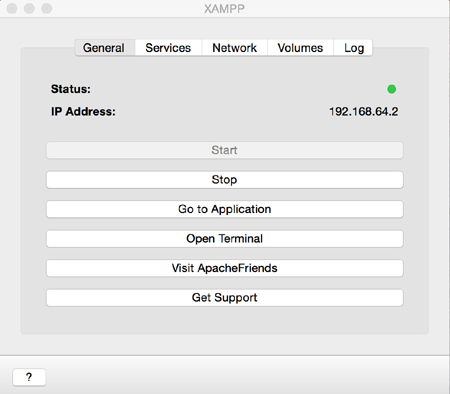
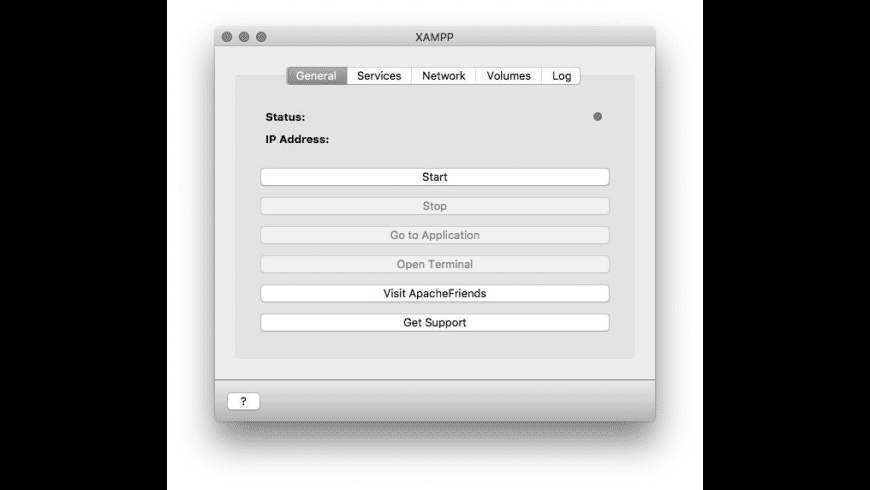
As world is going towards very simple and easy steps when it comes to operation. The operation may include installation configuration and running of a software. These all steps are very easy and simple in case of XAMPP. Easily you can configure the above services in the XAMPP control panel. Tasks such as checking the server status and security launch tools like phpMyAdmin and Webalizer analytics can be carried out from the control panel with ease. For the beginners there are demos for everything which can be of great use.
Simply saying, XAMPP is a complete package for Mac users as well. Simple steps and easy GUI of the software makes it perfect choice for the beginners as well for experts. Download XAMPP updated, that has latest Apache, PHP and MySQL versions.
How to Install XAMPP on Mac
- First of all download XAMPP DMG file for Mac from above link or any trusted publisher.
- Secondly open the file that you have downloaded.
- Thirdly put this file into your Applications folder
- To start it on Mac go to /Applications/XAMPP/manager-osx.app to open XAMPP Control. Then open Manage Servers tab to start Apache and MySQL.
- To test installation on Mac OS X open browser and type http://localhost. XAMPP start pager will be seen. Enjoy !
XAMPP for Ubuntu
XAMPP is well known to Windows users, as most of the Windows users use it to server development. But it also offers a great package for Ubuntu/Linux as well. Here we will explain how to install and uninstall XAMPP in Ubuntu. These simple steps will help you to accomplish the task smoothly. Also you can verify the installation ‘done’ bye simply using few URLs. There is a privilege for Ubuntu users that you can uninstall the whole package by just few commands.
We have performed downloading, installation, running and uninstallation in Ubuntu 18.04 LTS system. The method and commands are described below:
How to Install XAMPP on Ubuntu 18.04 LTS System
- First step is to download the installation file for Ubuntu. You may download XAMPP latest version for Ubuntu click here or use any other trusted publisher for downloading the package.
- Open terminal to execute the file. Use shortcut key to open terminal by typing on your keypad ‘Ctrl+Alt+T’. Once the terminal is open, access the downloaded file in the location of your computer. Now it is executable. You can use these commands for accomplishing the process:
$ cd/home/[username]/Downloads$ chmod 755 [package name]
- Now, you have to confirm execute permission by typing
$ ls -l [package name] interminal.
- Step 4 will be to launch the Setup Wizard. Forthis
$ sudo ./[package name]
- Then to launch Setup Wizard go through the graphical setup wizard by following the steps appear in the Bitnami GUI.
- Now, Launch XAMPP through the Terminal. In the CLI type to launch it through terminal.
$ sudo /opt/lampp/lamppstart
- Step 7 is to Verify Installation. After when installation is finished you need verify it by typing http://localhost in the browser. In the response you will get a welcome note with the Linux version on screen. Hurrah! You have successfully completed the installation and ready to use.
XAMPP Portable
Like other portable application XAMPP portable setup also works perfectly. Before running its Portable setup you need to use XAMPP Launcher. Then download the Portable version and install it in the root directory of your portable device or in the subdirectory within the Launcher. Also to open the zip/7z archive of the XAMPP Portable version with 7 –Zip Portable.
XAMPP Portable is a full package. The complete portable package is equipped with web, database and FTP server for Windows. Like full package, Portable package also has all the necessary tools. It includes:
- Apache,
- MySQL,
- PHP + PEAR,
- MiniPerl,
- phpMyAdmin,
- OpenSSL,
- Webalizer,
- XAMPPControl Panel,
- FileZilla FTPServer,
- XAMPPSecurity,
- Tomcat
- Mercury MailTransport System,
- ADODB,
- SQLite,
- Zend Optimizer,
About Apache Friends
Apache Friends’ ultimate goal is to promote the Apache web server by developing completely free tools like XAMPP. It is a non-profit project just to help developers and programmers. The pacakage is very simple and easy to download, install and run Apache distribution containing Maria DB, PHP, and Perl.
Community
XAMPPhas a huge community base as they have been working for 10 years. You maycontact them and share your ideas and get involved in discussions by followingtheir facebook page, twitter account, and Google plus. The Apache Friendscommunity is very helping.
https://www.facebook.com/we.are.xampp
https://twitter.com/apachefriends
https://plus.google.com/+xampp/posts
For more information and updates hop on to
XAMPP – most of the web developer will know what it is! This simple description is for the newbies.
XAMPP is completely free PHP development environment. It contains Apache distribution packed with mysql , PHP and Pearl which is available for most popular OS’s like Windows/Linux/Mac OSX, that makes you to configure and run Apache server in your local machine.
Before downloading the XAMPP, be sure about the PHP version you need. You can download the Latest Version of XAMPP here.
Steps to Install XAMPP in MAC
- Download the appropriate DMG file and mount it to your mac by double click on it. Application installer opens and guides you through the installation steps.
- Double click on XAMPP icon to start the installation process.
- click on Next buttonto continue.
- Select the XAMPP components which are all you want to install in your MAC
- After clicking the Next button ,XAMPP will install to your Application Folder.
- Open the bitnami link in a new window. There you can find free installer for wordpress, Joomla, Moodle, Magento, Drupal, etc… Which tends you to install these things over your XAMPP.
- Uncheck the checkbox below the link and click Next button.
- XAMPP Installation process will complete after clicking the Finish button.
Yeah thats it ! now your MAC is equipped with XAMPP.
Steps to Start Apache Server in local machine
Its time to start apache server in the local machine!
- By simple click in the “Go to Application” button start the apache servers and take you to the local server’s index page in the browser.
- Open Application Folder opens the XAMPP folder inside the Application folder.
- After clicking on Go to Application button, it redirects you to the browser where you have to pick your language.
- After choosing your language, it redirects you to the index page of your local host. You can find some inbuilt tools there.
phpMyadmin -> you can create or manipulate database easily with the help of this tool.
webalizer – > its a web analyser tool.
Manage Servers with XAMPP
- You can start, stop, restart or configure your Server under Manage Server tab.
- You can monitor the server event through Application Log panel and can easily identify for error or any malfunction happens with in it.
Configure Virtual Host in XAMPP
The virtual host is required whenever you are working in multiple projects and their directories are at different location. Virtual Host allows you to run multiple local sites using single apache server.
You can configure n number of virtual host but it must have unique different name
Steps to configure the Virtual Host in XAMPP
- Select the Apache Web Server
- Click the Configure button
- In the configuration window click on the Open Conf File button
- Click yes on the advanced user warning that appears.
Enable Virtual Host
You have to enable the virtual host in this configuration file.
Search for “# Virtual hosts” and uncomment the “Include etc/extra/httpd-vhosts.conf” line by removing ‘#’ before it.
Before:
# Virtual hosts
#Include etc/extra/httpd-vhosts.conf
Localhost Dashboard Mac Os Xampp

After:
# Virtual hosts
Include etc/extra/httpd-vhosts.conf
Change User Group
Find these “User/Group” line and Change the user group name (daemon) to your MAC user name. This prevents the server from making 403 access forbidden error.
Before:
<IfModule unixd_module>
#
# If you wish httpd to run as a different user or group, you must run
# httpd as root initially and it will switch.
#
# User/Group: The name (or #number) of the user/group to run httpd as.
# It is usually good practice to create a dedicated user and group for
# running httpd, as with most system services.
#
User daemon
Group daemon
</IfModule>
After
<IfModule unixd_module>
#
# If you wish httpd to run as a different user or group, you must run
# httpd as root initially and it will switch.
#
# User/Group: The name (or #number) of the user/group to run httpd as.
# It is usually good practice to create a dedicated user and group for
# running httpd, as with most system services.
#
User YourMacUserName
Group daemon
</IfModule>
after making this changes save the configuration file and restart the apache servers.
Creating Virtual Host
Now you can see a new file inside “/Applications/XAMPP/xamppfiles/etc/extra” called “httpd-vhosts.conf”
Open and edit : /Applications/XAMPP/xamppfiles/etc/extra/httpd-vhosts.conf
Download Xampp For Mac Os X 10.5.8
Add the below lines at the end of the file
# My custom host
<VirtualHost *:80>
ServerName yourSiteName.local
DocumentRoot “/Users/yourusername/path/to/your/site”
<Directory “/Users/yourusername/path/to/your/site“>
Options All
Allow from all
AllowOverride All
Require all granted
</Directory> ErrorLog “logs/mysite.local-error_log”
</VirtualHost>
Replace the yourSiteName.local & document root path to the required one.
Creating Host Entry For the Virtual Host
- Open the terminal and edit the host file using the command sudo nano /etc/hosts
- Add these lines to the Host file
# XAMPP VirtualHost mappings
127.0.0.1 yourSiteName.local
To create multiple host replicate the code added in /Applications/XAMPP/xamppfiles/etc/extra/httpd-vhosts.conf file again but with different site name and add the host entry for that also. Restart the Apache server for the changes to take effect.
Yeah it’s all done. Now you can hit the virtual host in the browser.If you have any doubts and clarification regarding this, drop it in the comment section.
If you like this post, Share it to your friends. Dont forget to Subscribe our Feeds, Follow us on Twitter, Facebook and Pinterest.
Amazon.com Widgets